
Easier and reliable way for pipe jointing
FUIS HDPE Electo-Fusion System
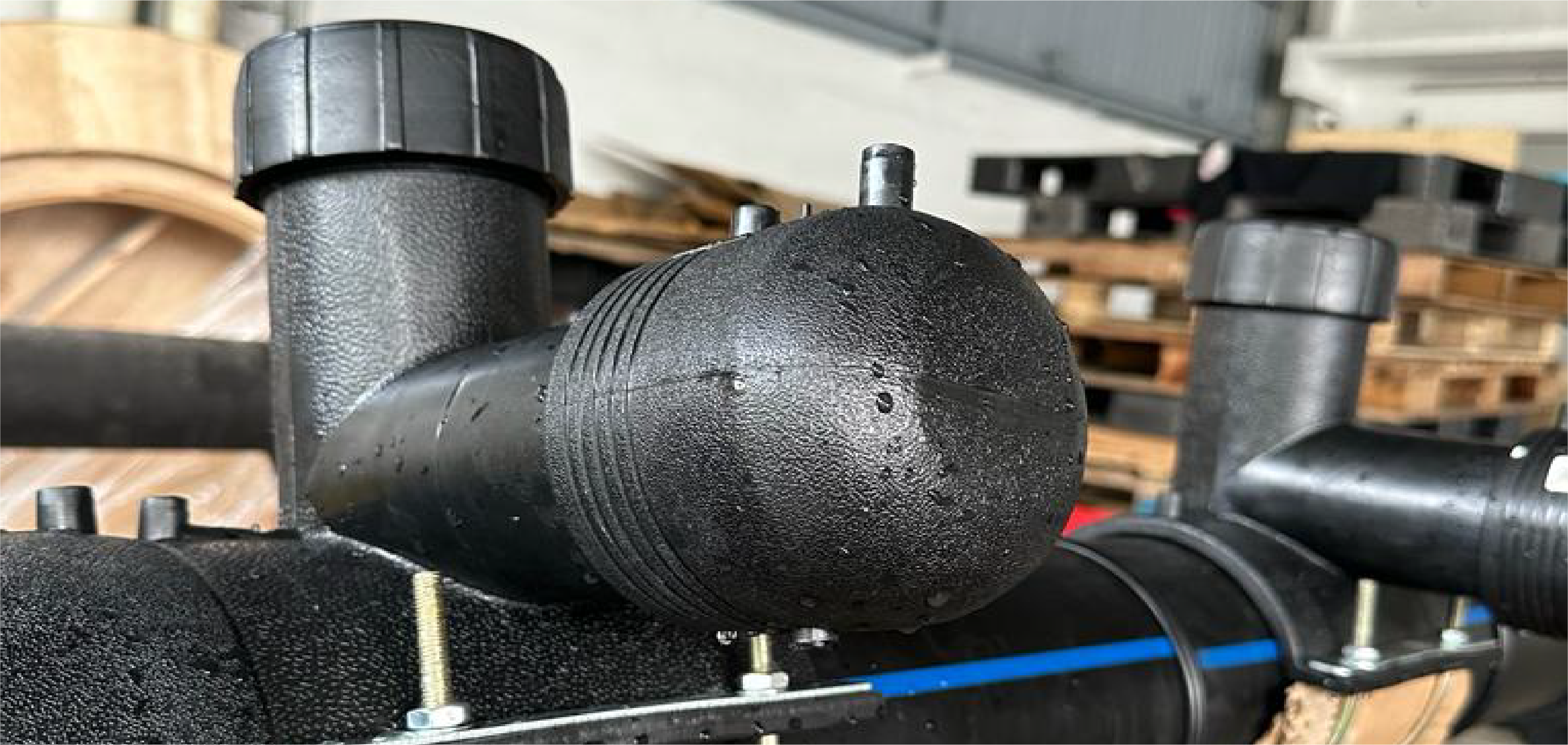
What is Electrofusion?
Electrofusion is a method of joining two pieces of high-density polyethylene (HDPE) pipe together by using an electric current to melt the plastic at the joint and create a strong, leak-proof bond. Electrofusion is commonly used in the water, gas, and wastewater industries, as well as in industrial and mining applications.
The electrofusion process involves inserting an electrofusion fitting or coupler between the two pieces of HDPE pipe to be joined. The coupler has a heating element inside, and when an electrical current is applied, the heating element melts the HDPE plastic at the joint, fusing the two pieces of pipe together. The resulting joint is typically as strong as the surrounding pipe, and it is resistant to leaks and other types of damage.
Electrofusion can be used in a wide range of applications, including:
- Water and Wastewater Systems : Electrofusion is commonly used to join pipes in water and wastewater treatment plants, as well as in municipal water supply and distribution systems.
- Gas Distribution Systems : Electrofusion is a popular method for joining HDPE pipes in gas distribution systems, due to its strength and durability.
- Industrial and Mining Applications : Electrofusion is also used in industrial and mining applications, such as in the transport of chemicals, acids, and other hazardous materials.
Electrofusion is a reliable and efficient method of joining HDPE pipes, offering a range of advantages over traditional joining methods.
Advantages of FUIS HDPE Electrofusion
HDPE electro-fusion is a process that allows for the joining of two HDPE components through the use of heat to create seamless and homogeneous joint. The process involves heating the embedded wire until inner section of the fitting become molten to form a homogeneous joint between the pipe and the fittings.
HDPE electro-fusion system offers several advantages over other jointing techniques. Some of the key advantages are :

Strong and leak-free joints
HDPE butt-fusion creates a strong, seamless, and leak-free joint between the two components. The fusion process involves melting the two ends of the components and then fusing them together under controlled pressure. This results in a joint that is resistant to leaks and other types of damage.

Cost-effective
The HDPE butt-fusion system is a cost-effective jointing technique. The process is relatively quick and requires only a small amount of energy to complete, making it a cost-effective solution for joining HDPE components.

High efficiency
The HDPE butt-fusion system is a highly efficient jointing technique. The process is relatively quick and requires minimal preparation and set-up time.

Reduced maintenance
HDPE butt-fusion creates a joint that requires minimal maintenance over its lifespan. The joint is resistant to corrosion and other types of damage, reducing the need for costly repairs or replacements.

Durability
HDPE butt-fusion creates a joint that is highly durable and resistant to damage from chemicals, abrasion, and environmental factors.

Environmentally friendly
The HDPE butt-fusion system is an environmentally friendly jointing technique. HDPE is a recyclable material that can be reused and repurposed, reducing waste and environmental impact.


